Monday, April 27, 2015

Jammin' with Roger McGuinn and the 10,000 Hour Rule

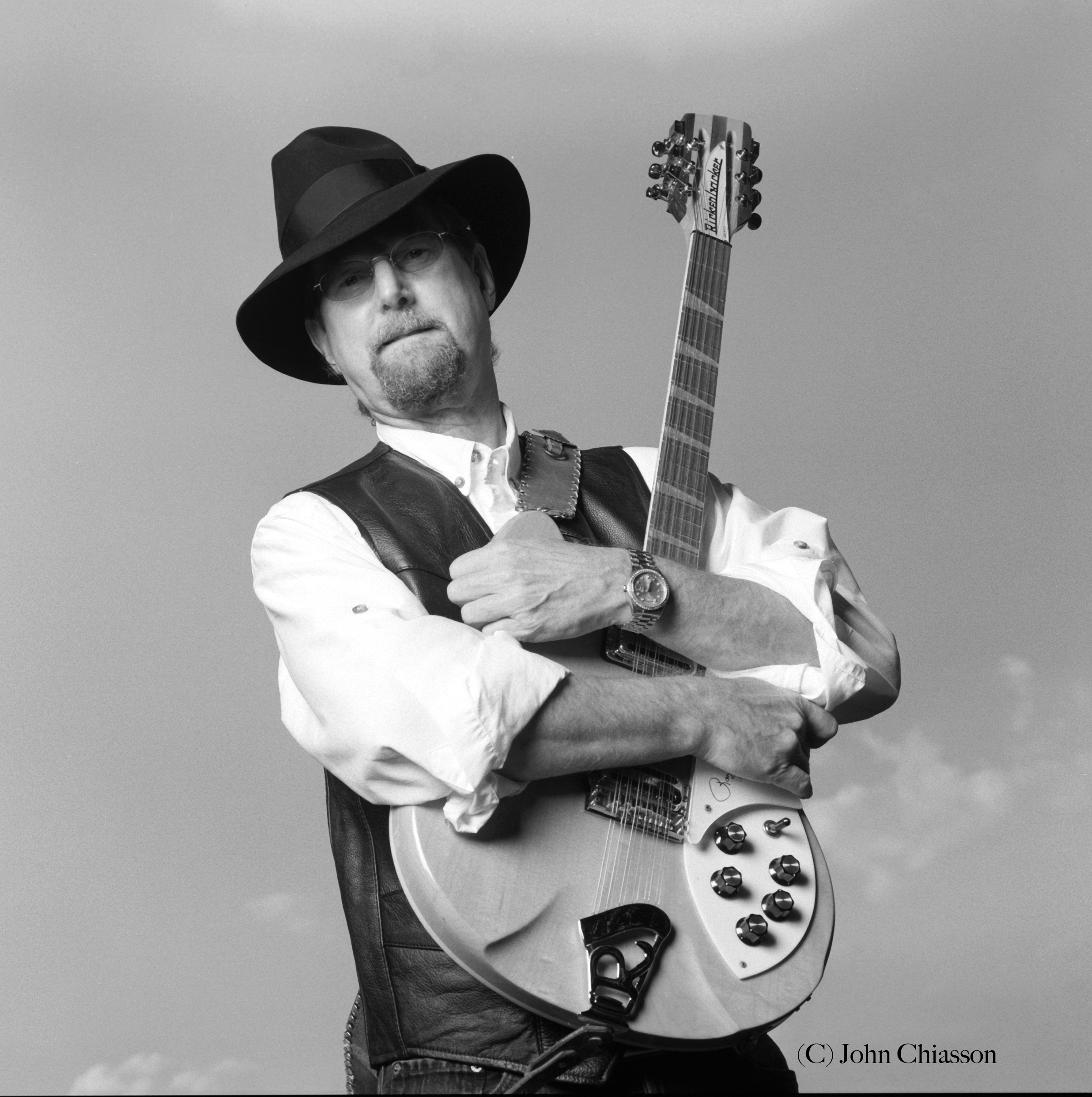
Roger McGuinn
Last week I had the opportunity to play guitar with the legendary front man of the Byrds, Roger McGuinn (Mr. Tambourine Man, Turn Turn Turn, Eight Miles High, Knockin' on Heaven's Door, etc.). It was part of a workshop that my new buddy Roger led that began with a PowerPoint chronicling his career and ending with him leading a guitar circle with me and about 40 other guys.

Of course it was great fun to play with a rock immortal, but we did get a chance to ask him how he got so good at guitar. His answer: "I started practicing 8 hours a day from the age of 15."

Funny that: it was the exact same answer I got when I asked another brilliant local guitarist by the name of Doug Mikula who said: "I practiced about eight hours a day from the age of 12."

This reminded me of a theory espoused by Malcolm Gladwell that essentially says that it takes about 10,000 hours to master anything that requires a high level of skill, whether it involves learning a musical instrument, a foreign language, or even brain surgery.

So, if Roger McGuinn practiced 8 hours a day from the age of 15, that would make him a guitar virtuoso in approximately 3.5 years. What's interesting is that Mr. McGuinn signed his first professional contract at the age of 17, but he had pretty much mastered an original style on banjo and guitar by the age of 19.

I think the moral of the story is one of commitment. Doing anything as difficult as learning an instrument, cutting and suturing human tissue, or hitting a baseball takes a level of discipline and patience that few can muster.

It also explains why I will never be a great guitarist. I picked up the guitar again about 10 years ago after letting my gorgeous Martin D-19 sit in a closet for 30 years. I play at most an hour a day--usually less, because I get frustrated by fingers' lack of obedience to what my brain tells them to do. I don't have the patience to practice 8 hours a day--it would drive me insane.

By that reckoning, I've practiced about 3,000 hours over the last 10 years. At that rate, it will take me another 24 years to become a virtuoso guitarist. By that time I will be in my 80s and my fingers will probably have become gnarly arthritic stumps.

However, if you believe in the 10,000-hour rule, it can give you hope that you can accomplish anything if you love it enough to put in the time. Writing is about the only thing that I've done for more than 10,000 hours, and it's worked out okay for me.

Tuesday, April 21, 2015

The Downside of Adulthood

Many things diminish as you grow out of childhood. Childhood is the unfiltered you. The pure wants, the joys, the sorrows, the selfishness, and aggression are clean and expressed 100 percent. The rest of your life (I'll use "your" in this context to refer to "all of us"), is a matter of herding and wrangling and controlling the primitive surge of emotions and desires.

Wasn't it cool when we could just grab the crayon out of little sister's hand when our project required yellow? Wasn't it satisfying at the age of 4 to yell out to your mom "I hate you!" and get away with it? To sing out loud, to punch your friend Nick in the face, to violently disagree with Daddy when it was time to go to bed to eat your corn to tie your shoes to shut...your...mouth?

Adulthood is about self-control--not to say what is on your mind to your boss or your spouse, not to sock the guy in front of you who is making a left turn without signaling, not to argue with the umpire who calls you out even though you beat the throw by a foot, not to call your neighbor a moron when he or she is behaving like one. 

Is adulthood nothing more or less an ever-tightening noose of repression?

There are mitigating circumstances--you do tend to get wiser and more adept with age, and driving cool cars and drinking cold martinis are decent benefits. But they hardly compensate for the lost freedom of childhood, which excuses behaviors that are innately human yet must be effectively stifled to maintain a civilized coexistence.

By now, however, I've kinda forgotten what real freedom is like, locked into behaviors and mindsets that make me a responsible adult. It's tragic and unfulfilling in many ways. But then, at age 61, could I truly handle the intensity of a renewed childhood?

Monday, April 13, 2015

Hillary Clinton and Jeb Bush

So the greatest democracy in the world and the best it can come up with are...Hillary Clinton and Jeb Bush? How did we get to that place--where both presumed candidates for the highest office in the land are legacies from days gone by? Should we replace inaugurations with coronations? Do we face a future in which Chelsea Clinton will face off against Jenna Bush?

Is the candidate pool that thin. Yes it is. 

In an age in which Congress can't get out of its own way to, you know, actually make laws and the Supreme Court is politicized to the point of ineffectuality, the presidency faces its own crisis.

But that's the state of American politics. It's a game of money and connections, and having a built-in brand like the Clintons and Bushes makes it easier to raise the billions of dollars it takes to run a national campaign. Thus the uninspired choices that likely face U.S. voters 19 months from now.

The radical Republicans who have announced so far will undoubtedly be overwhelmed by the Bush juggernaut once it gets cranking and it's unlikely that Hillary will face any serious opposition--both parties have weak farm systems and America can't seem to escape the stranglehold of a two-party system. Of course Ralph Nader will probably run again...

This is not to say that Hillary and Jeb are unworthy of the presidency. But wouldn't it be nice if some relative unknown with blazingly amazing credentials rose up to challenge the Establishment? The fact that Obama  was able to come out of nowhere eight years ago seems beyond extraordinary today.

Well, Marco Rubio?

(Sigh, it's going to be a long, dull campaign.)

Monday, April 6, 2015

Oldest Guy in the Room

It doesn't seem that long ago that I was usually among the youngest people in my department or company. Everyone else seemed so much older--grayer, paunchier, more mature, set in their ways. Kids, grandkids, and so forth. I generally deferred to their 20 or 30 years of experience, assuming that they learned things along the way that would help me do my job better and faster.

And now, suddenly, I am that guy. I am the oldest person in my department of about 30 workers. I'm the guy with 30 years of experience and, one would think, the person with the accrued wisdom of having been there and done that millions of times.

Today, a couple of the people in my department are as young as my oldest daughter. My boss and department head are at least 10 years my junior. For the most part, my team looks like a bunch of kids. How did that happen? When did it happen?

I look young for my age and keep myself in shape, so people are shocked when I tell them how long I've worked for the company. But one thing I've noticed is how disinterested they are when it comes to seeking advice.

My 20-, 30-, and 40-year-old coworkers seldom come to me for ideas and suggestions, as though my experience is useless to them. I'm fairly good at my job and would be able to offer some tips to help others work more effectively and efficiently. But for some reason, my coworkers are not inclined that way.

This doesn't bother me in the least, since my experience enables me to master and complete  my work in a fraction of the time it would take others. My experience also enables me to coast through my days as I watch others struggle and suffer with their projects.

While I've often suggested ways to potentially achieve better results, those in charge insist on doing things their way--often to a fault.  I'm curious why experience is undervalued in my workplace. Maybe it takes experience to appreciate experience.

Wednesday, March 25, 2015

If You Have a Boy Child...Teach Him Baseball!

I have been blessed with two wonderful girls who have blossomed into quite delightful and accomplished young women.

But it would've been kinda nice to have had a boy as well. Among other pleasures, it would have enabled me to exercise some theories when it comes to properly introducing my son to the art and science of baseball. Besides the inherent joy of playing this wonderful game, if my son had the requisite natural talent and proper coaching to aspire to the game's highest levels, it would make for quite a career.

Some quick research indicates that the average major league salary today is about $3.2 million a year. Since the average major league career lasts 5.6 years, a person would have a nice nest egg by his early 30s. Of course NBA players average over $5 million a year for careers lasting an average of 5 years, but since my genes would never produce a giant, that route would seem impractical. Plus there are fewer NBA spots open than in the MLB, and the international competition is brutal

And football is out of the question, since it pays a measly $1.9 million a year for an average career of just 3 years. Plus, you're a basket case and a physical wreck by the time the NFL has used you up.

So back to baseball. So learning based on the coaching and nurturing mistakes made during my nascent baseball upbringing in the late 60s and early 70s, here's how I'd get my son started:
  • Get a bat in his hands by the age of 3 and teach him to hit from both sides of the plate. Never let him learn his natural hitting side. My baseball career was on the ropes the first time I faced a good lefty curve ball (I batted left handed). A switch hitter never has to face a pitcher with a curve ball that breaks away and it gives the coach more flexibility when putting together a line-up, resulting in more playing time for switch hitters.
  • If right-handed, teach him to play every position, including catcher. At the very least, hit him a million ground balls at shortstop and second base and a million fly balls to center field. Players who can play the middle positions (catcher, SS, 2nd base) are more valuable for their gloves and lessens the need to become power hitters, which is a rare gift as opposed to something that can be taught. 
  • If left-handed, teach him to play first base and the outfield. Also teach him to pitch. Every team needs lefty pitchers because they are a rare breed. Even if he doesn't have a blinding fastball, teaching him a variety of breaking pitches and changing speeds will enable him to get even the best hitters out.
  • Teach him to hit line drives to all fields using a short, quick and even stroke. Pull hitters are worthless unless they can hit with power. Line drive hitters hit for high average, drive in a lot of runs and, once their mechanics are fully developed and they start filling out physically, they can add power to their repertoire down the road. Think Don Mattingly and Mike Trout.
  • Have him play all sports. I don't believe in club teams and travel teams since it focuses on and wears down specific muscle groups. Your son will develop better overall athletic skills if he plays baseball only during baseball season and plays basketball, tennis, cross country, hockey, etc. during the appropriate seasons. I would recommend against football, given the risks to life and limb. Once out of high school and the potential is there, then maybe baseball becomes a year-round vocation.
  • Finally, practice, practice, practice. One positive thing I did growing up was throwing a golf ball against a concrete wall and fielding the crazy ricochets blasting back at me. It made my reflexes lightning quick and enabled me to handle any hot smashes coming my way at first base. Also, the best batting practice in the world is hitting off a tee. It's more difficult than you think. The only way to make solid contact is with a perfectly level swing, which is the key to good hitting merchanics.
This piece is running long, but I have a lot more. Let me know if you're interested.

Thursday, March 19, 2015

Guns in America--No, Not Those Guns!

I'm referring to biceps, those relatively large muscles on the top of your upper arms that for some reason are nicknamed "guns" by the weightlifting set. As a runner, I force myself to spend time in the gym doing resistance work, mainly on my upper body so I don't shrivel into one of those scrawny old-man runners who can cover great distances but look like plucked chickens with collapsed chests and boney shoulders because they don't exercise any other parts of their body.

So to distract myself from my miserable reps, I end up observing serious weightlifters and their routines. And I've never seen a weightlifter not do millions of arm curls to build up excessive mass in their guns. Many have skinny legs, under-developed hips and narrow forearms--but they all have great guns!

Of course they also do a lot of work on their chests, belly and shoulders, but the overall effect is a mismatch of bloated arms and torso and broomstick legs.

But about guns--what good are they? How often do you really use over-developed biceps, unless you move a lot of furniture. Maybe it's the influence of the old Popeye cartoons in which he'd pop open a can of spinach and down it in a gulp, resulting in the appearance of battleships on his guns firing away and propelling our hero into the latest demolition of Bluto, his Nemesis.

Do you need great guns to get through your daily activities? I don't. But still I find myself doing several reps of bicep curls with 30-lb weights, just like everyone else. It's what guys in weight rooms do.

So do I have great guns? No, not really, I'd put them in the water pistol category. But maybe they'll help me type better, or run a little faster.


popeye1.jpg

Thursday, March 5, 2015

Why It's Called Climate Change

So we're getting another six inches of snow as I'm writing this and then tonight another arctic freeze will be swooping in, further blackening my mood.

Another winter of record cold and drifting snow in the East. We haven't hit the so-called average normal high for this time of year in weeks. Same as last year. Is this proof that global warming isn't happening? Unfortunately for this warm-blooded guy who despises winter cold, it is not.

While planet-wide 2014 was the warmest on record, that was not really the point. The point is change. While many parts of the U.S. were cooler than usual, many other parts were and are hotter and drier than usual. Extremes are becoming more extreme. Rains have come harder, snow falls are deeper, and droughts are lasting longer.

Some may protest that what we're experiencing is just a cycle in nature and not an outcome of man-made causes. But whatever the case, it seems pretty clear that weather patterns are changing--and not for the better.